
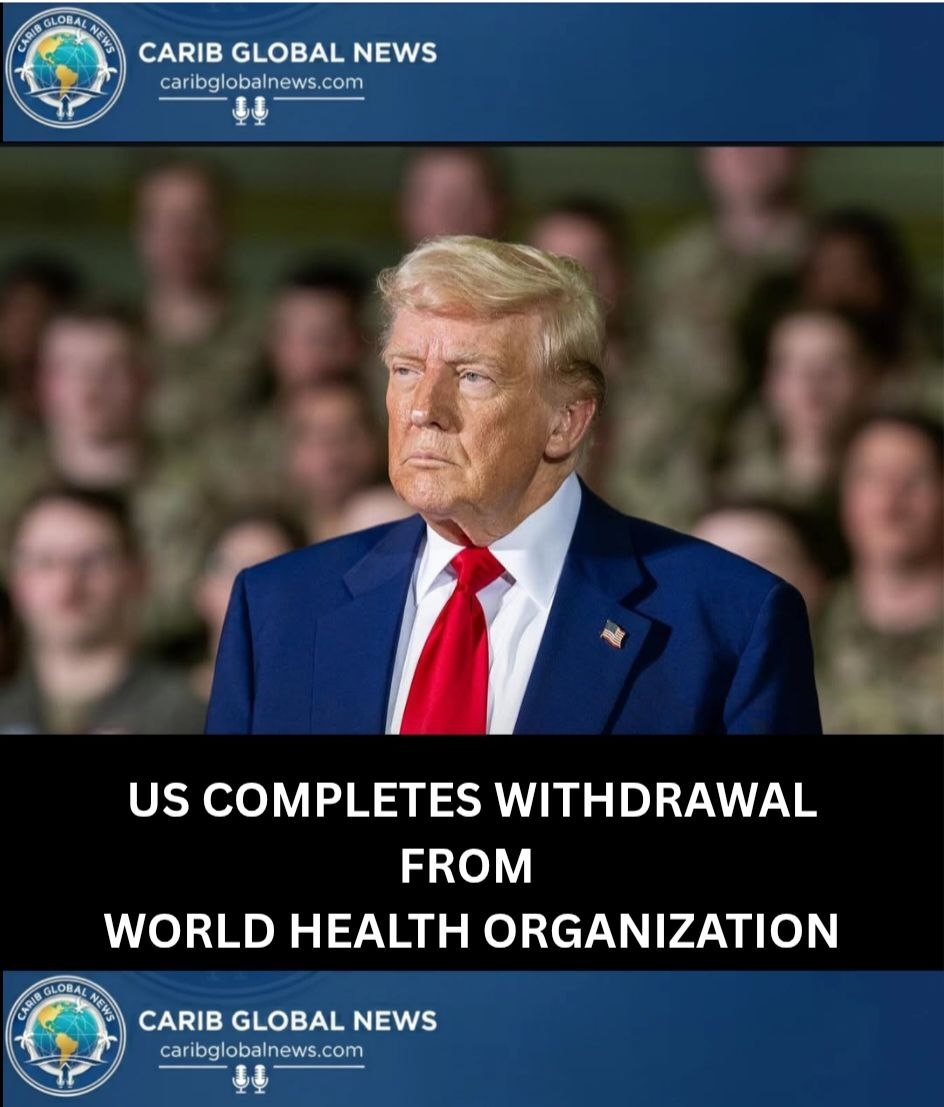
U.S. Officially Exits World Health Organization
The United States has formally completed its withdrawal from the World Health Organization (WHO), ending decades of membership in the UN-affiliated global health body and triggering widespread concern among international health experts and U.S. allies.
The withdrawal, initiated by the U.S. administration months earlier, takes full legal effect this week, according to officials familiar with the process. As a result, the United States will no longer participate in WHO decision-making, funding mechanisms, or coordinated global health responses under the organization’s framework.
The U.S. had historically been one of the WHO’s largest financial contributors, supporting disease surveillance, emergency response, vaccine programmes, and health initiatives in developing countries, including the Caribbean.
Administration Defends Decision
U.S. officials have defended the move, arguing that the WHO failed to act independently and transparently during major global health emergencies. The administration has also criticized what it described as inefficiencies, political influence, and a lack of accountability within the organization.
In a statement, a senior U.S. official said the decision would allow Washington to pursue “new, more effective global health partnerships that better serve American interests and global public health.”
The administration has indicated that the U.S. will seek bilateral and regional agreements to replace some of the functions previously handled through the WHO.
Global Reaction and Health Concerns
International reaction has been swift, with several governments and public-health organizations expressing concern that the U.S. exit could weaken global preparedness for future pandemics.
WHO officials have warned that the departure of a major contributor could impact funding for disease-control programmes targeting HIV/AIDS, tuberculosis, malaria, and emerging infectious threats.
“The world is safer when countries work together,” a global health expert said. “A fragmented response to disease benefits no one.”
European Union leaders and several Caribbean public-health agencies have urged continued cooperation, stressing that viruses do not respect borders.
Implications for the Caribbean
Health analysts say the U.S. withdrawal could have ripple effects across the Caribbean, where WHO-coordinated programmes support disease surveillance, hurricane-related health responses, and vaccination campaigns.
Regional health officials are monitoring developments closely to assess whether funding gaps or technical support reductions may affect local public-health systems.
Caribbean governments have not yet issued a unified response, but some officials privately expressed concern about reduced global coordination during health emergencies.

Background: A Controversial Exit
The U.S. decision to leave the WHO has been politically divisive at home, with critics arguing that withdrawal undermines U.S. leadership and global health security. Supporters, however, say the move sends a message about reform and accountability in international institutions.
Public-health scholars note that rejoining the WHO in the future would require a new administration decision and financial commitments to clear outstanding obligations.
What Happens Next
The WHO will continue its operations without U.S. participation, while Washington begins restructuring its global health engagement strategy. Experts warn that the long-term impact of the withdrawal will depend on how effectively alternative partnerships are built and maintained.
Further responses from international bodies and U.S. lawmakers are expected in the coming days.
This is a developing story.